
They Were Stuck at 2 Hours Per RO for Years… Until This One Shift Happened
Last week I was on a Zoom call with a shop owner we’ve been coaching.
Good shop. Good people. Solid technicians.
But they’ve been stuck in the same place for years.
Right around 2 hours per RO.
They’ve tried everything to move it.
More inspections.
Better inspection software.
Advisor training.
New marketing.
Different pricing strategies.
Still… two hours.
If you’ve ever lived in that range, you know how frustrating it is. The cars are there, the team is working, but the numbers never quite reflect the effort.
So during the call I asked a simple question.
“Do you believe your job is to sell maintenance… or to make sure the customer is properly informed about their vehicle?”
There was a pause.
Because those sound similar on the surface. But they lead to very different behavior at the front counter.
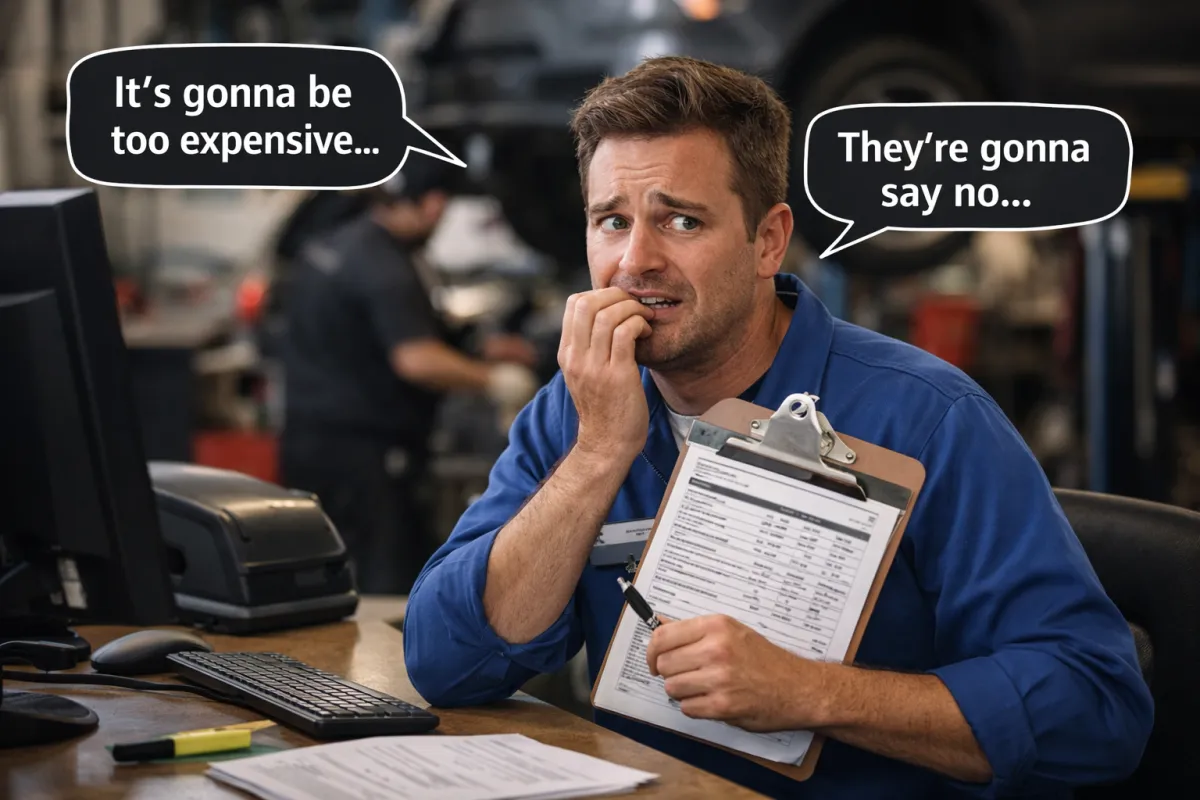
Selling maintenance creates hesitation.
Advisors start filtering recommendations.
They soften language.
They assume what the customer will or won’t do.
They pick a few items and hope for a yes.
Making sure a customer is properly informed creates something else entirely.
Clarity.
When the goal becomes helping the vehicle owner understand what their car actually needs to stay reliable, the conversation changes.
It’s no longer:
“Would you like to do this today?”
It becomes:
“Here’s what your vehicle needs, here’s why, and here’s how we prioritize it.”
That shift alone starts to move the needle.
But mindset without structure only lasts about a week.
So the second part of the conversation was systems.
If advisors are expected to explain maintenance properly, they need tools that make it easy to communicate clearly and consistently.
That’s where Canned Service Packages come in.
Instead of presenting random line items, the shop builds structured service packages around mileage intervals and manufacturer recommendations.
Now the advisor isn’t improvising.
They have:
• The right services grouped together
• The right language to explain them
• The right reasoning behind why they matter
• A consistent way to prioritize what the car needs
What that creates is something simple but powerful: informed consent.
The customer understands the vehicle.
They understand the risk of waiting.
They understand the value of acting now.
When people understand, they decide differently.
And suddenly that 2.0 hours per RO doesn’t feel like a ceiling anymore.
Moving from 2.0 to even 2.5 hours per RO isn’t about pushing harder or “selling more.”
It’s about fixing the thinking and building the systems that support it.
In a typical shop doing about 60 cars a week, that kind of shift can unlock $373,000 in new gross profit this year.
Same cars.
Same team.
Just better structure and better conversations.
I’ve seen it happen too many times to call it luck.
If you’re sitting in that 2-hour range and it feels like you’ve tried everything, there’s a good chance the answer isn’t more effort.
It’s a shift in how the service is presented.
If you want to see what that looks like in your shop, send me a message. I’m happy to walk you through it.